




Filmmakers, Screenwriters, Performance, Reviews, Film Reviews, Streaming

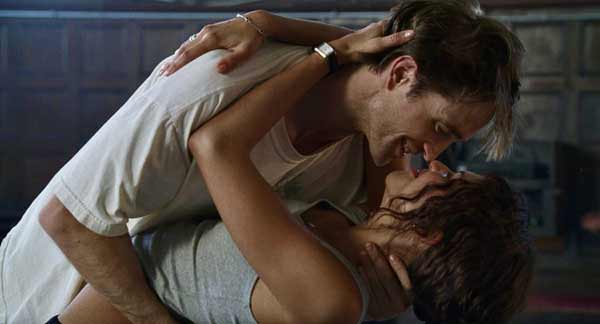
Photo Courtesy of A24
THE DRAMA
In the early stages of a relationship, it makes sense to sand down rough edges — presenting a cleaner version of yourself while trust takes shape. Not every flaw needs to be revealed on the first date, and certainly not every regret. Those darker corners are better shared later, if the bond survives long enough to bear them. But what happens when we’re forced to reveal a truth so raw it changes everything before trust is strong enough to endure it? Not all secrets are dangerous — but badly timed frankness can be catastrophic. That uneasy tension between truth and timing lies at the heart of "The Drama," writer-director Kristoffer Borgli’s latest dark comedy of bad manners, a scalding look at the consequences of saying too much. Zendaya and Robert Pattinson play an engaged couple pulled into a game of “What’s the worst thing you’ve ever done?” by their best man and maid of honor a week before the wedding. Up to this point, the film follows the breezy path of most romantic comedies — meet-cute, glib banter, slow-burn attraction — making the confessions all the more startling when they turn brutally close to the bone. Then again, this is Borgli, who — like fellow Scandinavian filmmakers Aki Kaurismäki, Ruben Östlund, and Thomas Vinterberg — has built a reputation on the precise calibration of emotional discomfort. What begins as a harmless parlor game quickly curdles into something far more unsettling. One confession involves betrayal. Another, systematic bullying. A third recounts cruelty inflicted on someone unable to understand what was happening. And yet, the final confession — the one that alters the course of the entire narrative — involves no action at all, only the intention to commit one. In the world of "The Drama," the thought itself becomes the crime. What Borgli does next is especially bold. The final revelation does, for a moment, seize control of the narrative — as it would in almost any other film — but its shock quickly gives way to something more revealing: the ferocity of the response it provokes. In an instant, a friendship is severed, suspicion replaces affection, and the marriage hangs in the balance as the couple attempts to navigate this potential dealbreaker. Where your sympathies lie will depend on how you judge the magnitude of the admission, and Borgli masterfully balances both sides — offering mitigating circumstances that help us comprehend the “why,” while countering with the reaction of someone whose own life has been shaped by a similar tragedy that did, in fact, become real. As these responses play out, I found myself recalling my own private “what if” scenario. In a darker corner of my childhood, hopeless and alone, I too fantasized along similar lines. The difference between me and the character in the film was not moral clarity, but lack of opportunity — the absence of means to carry those thoughts into action. Borgli touches on this possibility in a sobering montage suggesting how close some of us may walk to the line — implying that all it takes is the right match and the wrong fuse to bring disaster. And yet “The Drama” is also a comedy — and a very smart one — built on sharply observed dialogue that exposes the quiet irrationality simmering beneath polite conversation. That sensibility carries through to the film’s closing moments, which land on a neatly judged comedic callback with a faint echo of classic Billy Wilder. The large ensemble keeps this risky material grounded. Credit casting directors Kate Antognini, Kharmel Cochrane, and Lisa Lobel for assembling a company that knows how to navigate Borgli’s tonal tightrope. And the two leads, whose chemistry feels natural rather than forced, provide the steady center Borgli needs for his pointed examination of contemporary American mores. Though we learn little about their lives beyond the confessions, Zendaya and Pattinson’s natural ease compensates for the missing context. Their vagueness makes the characters feel universal, inviting identification even when their actions are difficult to condone. In the end, "The Drama" isn’t about what people confess, but how quickly we decide who deserves forgiveness. Borgli’s film reminds us that judgment is often loudest when it feels safest, and that the distance between thought and action — between fantasy and consequence — may be thinner than we care to admit. It’s a comedy that laughs nervously at the edge of something much darker. |
|
An LA-based playwright, JUSTIN TANNER has more than twenty produced plays to his credit, including Voice Lessons, Day Drinkers, Space Therapy, Wife Swappers, and Pot Mom, which received the PEN-West Award for Best Play. He has written for the TV shows Gilmore Girls, My So-Called Life and the short-lived Love Monkey. He wrote, directed and edited 88 episodes of the web series Ave 43, available on YouTube. Tanner is the current Playwright in Residence for the Rogue Machine Theatre in Hollywood, where his most recent play My Son the Playwright, of January of 2026, was met with rave reviews. Travis Michael Holder of the LA Drama Critics Circle wrote, "a phenomenal new achievement by local counter-culture hero Justin Tanner.”
|

To receive a free subscription to our Sunday Lounge! newsletter, Click Here
Have a suggestion? Send an email to the Editor, Click Here