





Filmmakers, Screenwriters, Performance, Reviews, Film Reviews, Streaming

KING COPPOLA'S THE COTTON CLUB ENCORE
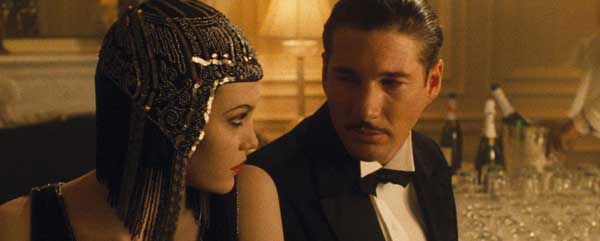
Between 1972 and 1979 Francis Ford Coppola directed, wrote (or co-wrote) four of the most highly revered movies in cinema history: “The Godfather”, “The Godfather Part II”, “The Conversation” and “Apocalypse Now”, a golden phase of masterful filmmaking few directors have come even close to matching. Since then he’s gone on to make fourteen more films — a fifteenth, “Megalopolis” is slated for a 2024 release — and though his post-1980 output has varied widely in both quality and success, there is much to savor. To be sure, for every “The Rainmaker” (his dynamite 1997 John Grisham adaptation) there’s a “Jack” (his queasy 1996 medical comedy with Robin Williams as a ten year old boy suffering from progeria); for every “Rumble Fish” (his baroque but gorgeously noirish S.E. Hinton adaptation from 1983) there’s a “Gardens of Stone” (his emotionally inert Vietnam memorial potboiler from 1987). Still, even “less-than-great” Coppola is, after all, Coppola, and regardless of his later filmography’s sometimes baffling missteps, there are always moments of glorious beauty to be found and a bounty of emotional transcendence on display. These days I actually prefer the strangeness and unexpected bursts of visual imagination found in his later work to the formalistic perfection of “The Godfather” films. And for sheer unadulterated bliss, nothing in the Coppola canon comes close to the ecstatic highs delivered by “The Cotton Club Encore”, his dazzling 2019 re-edit of the troubled 1984 commercial failure about the infamous ‘30’s Harlem jazz club. The film, based on James Haskin’s 1977 pictorial history book of the same name, has two main plots:
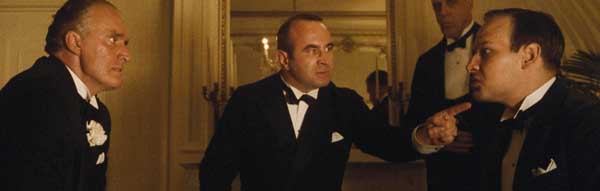
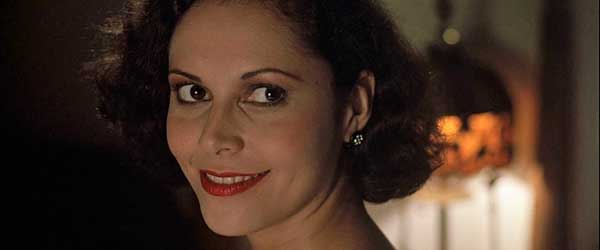
The rest of the massive cast, which includes Nicholas Cage, Tom Waits, Laurence Fishburne, Jennifer Grey, Bob Hoskins, Alan Garfield, Gwen Verdon, Julian Beck, Fred Gwynne, Diane Venora, Joe Dallesandro, Giancarlo Esposito, James Russo, Mario Van Peebles, Woody Strode and Jackée Harry fill out the various other threads of the plot, creating a hearty stew of life both on and off stage. The behind the scenes details of the half a decade of production mayhem — including the contract killing of Roy Radin, one of the film’s financiers — have been told and retold, most recently by Coppola himself in a 2019 Vanity Fair article. In that interview he relates the shocking news that after viewing an early cut, the studio chiefs — and some genuine mobsters involved in the financing — decided there were “too many black people” onscreen, ultimately forcing Coppola’s hand to cut out arguably the best scenes in the movie. The version that opened on December 14, 1984, effectively handed the film over to the less interesting aspects of the story. Instead of an exciting look into a world rarely seen in a Hollywood film (the Cotton Club itself), we got just another gangster saga filled with wise guys and machine guns.
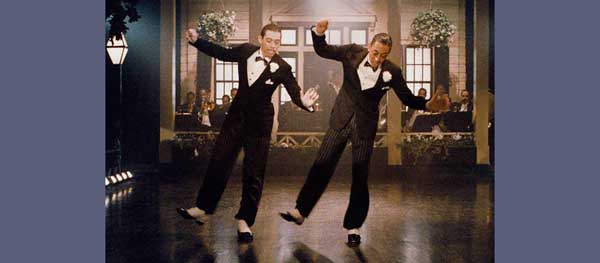
Though “The Cotton Club” was well-reviewed — and earned three Oscar nominations — it barely made back half of it’s runaway production costs. And the lasting legacy was tied more to its chaotic backstory than the movie itself. Then, in 2017, after coming across a Betamax version of the pre-butchered cut, Coppola decided to spend half a million dollars of his own money to restore “The Cotton Club”, creating a brand new edit that was finally shown two years later. This version not only extends the dancing and singing of the Hines brothers — and includes a marvelous and bawdy Jackée Harry number — it lovingly recreates Lonette McKee’s life-altering performance of “Stormy Weather” — a sequence that is now easily the cinematic peak of “Cotton Club Encore”, (and perhaps even of all Coppola). In the scene, McKee’s chorus girl Lila Rose Oliver, making her debut as a solo artist at The Cotton Club, is discovered standing in a pool of pink light, dressed in a simple yet stunning black satin dress, the band in shadowed silhouette behind her. Without moving; just simply using her emotive eyes to casually set the stage for the tale of woe to come, McKee brings the focus of the film to the sharpness of a pin point.
At a recent screening I attended, the entire packed audience seemed to lean forward as if magnetically drawn by the power of her voice and the supple, yet electric stillness of her body. And for the next five minutes we all held our collective breath while McKee brought the kind of evocative passion and bruised emotional inner life you’d expect from a Shakespeare monologue delivered by one of the greats. Though hindered slightly by a series of interruptive cutaways to various reaction shots — one wishes the camera would just stay with her performance — the song nonetheless continues to build. With each key change — which buffet the audience like a series of sonic shockwaves — the depth of McKee’s performance grows, first to a blistering anger, and finally to a heartbreakingly fearless resolution. By the time the song was over, the audience — many who were in tears — broke out into spontaneous cheering applause. It’s hard to imagine the utter disappointment McKee must’ve felt back in 1984, knowing she’d produced perhaps the finest musical performance ever captured on film, only to discover it had been relegated to the cutting room floor. Happily, this glorious milestone of cinema has been rescued, albeit 35 years late. Coppola is at his best in the scenes set in and around the Cotton Club, providing the kind of breathtaking sustained energy you just don’t experience anymore at the movies. With today’s hyperactive editing, soupy sound design and acrylic vocals — I’m looking at you, “Barbie” — it’s nearly impossible to feel the kind of focused high octane delight of live music that “Cotton Club” so easily revels in. And though the film’s host of dramatic storylines (which involve multiple romances and family betrayals, vicious gang violence, a kidnapping, racketeering, and a plot involving Hollywood moviemaking in the 30’s) can occasionally befuddle us with all their busy moving parts, Coppola manages, by using the energy of the music, a dynamic gliding camera and the propulsive motion of the dancers, to keep things buoyantly aloft. The film get a little strange in the second half as some questionable editing choices and an occasionally hard-to-follow timeline allow certain beats to tread water and some head-scratching narrative leaps to appear. But Coppola embroiders these seemingly disparate pieces together by the judicious use of abstract visuals that bring us out of the realm of the strictly realistic and into the chancy logic of dreams. A startling shot of Lane’s floozy character Vera with wide, staring trompe-l’oeil eyes painted on her closed eyelids, coupled with a line of dialog delivered by Gere’s musician character Dwyer: “This is not real life. It’s Jazz,” suddenly makes all of these seemingly improvisational jumps and narrative feints come into shimmering focus. In the last few minutes, Coppola pulls off a daring coup de cinema by sliding deliciously into full on fantasy, taking us — in a sequence reminiscent of Olivier’s transition from the Globe Theater to the hills of battle in “Henry V” — from within the theatrical confines of the Cotton Club stage proper into the frenzied halls of Union Station. It’s here that the movie successfully reaches the magical liftoff it’s been toying with for the previous two hours. As we watch Gwen Verdon give tap dancing tips to a young girl practicing her moves, and the lovers are reunited on a moving train, while back at the Cotton Club the full company performs a climactic number on stage, the mythology of history, cinema, romance and the brutal energy of the thirties gangster flick all click into place. When working at the height of his powers — as he is here — Coppola can, by simply moving a camera, pull us into his reality like no one else. “The Cotton Club Encore” might be messy, even occasionally frustrating, but there’s no denying the rapture of what Coppola has accomplished: bringing to vibrant life the joy that comes from being inside the pulse of live music. STREAMING ON KANOPY |
|
An LA-based playwright, JUSTIN TANNER has more than twenty produced plays to his credit, including Voice Lessons, Day Drinkers, Space Therapy, Wife Swappers, and Coyote Woman. His Pot Mom received the PEN-West Award for Best Play. He has written for the TV shows Gilmore Girls, My So-Called Life and the short-lived Love Monkey. He wrote, directed and edited 88 episodes of the web series Ave 43, available on YouTube. Tanner is the current Playwright in Residence for the Rogue Machine Theatre in Hollywood, where his new play Little Theatre, of December of 2022, was met with rave reviews. Charles McNulty of the LA Times writes, "Engrossing... a comedy à clef... “Little Theatre” is invaluable.'"
|


To receive a free subscription to our Sunday Lounge! newsletter, Click Here
Have a suggestion? Send an email to the Editor, Click Here