





Filmmakers, Screenwriters, Performance, Reviews, Film Reviews, Streaming

EL CONDE
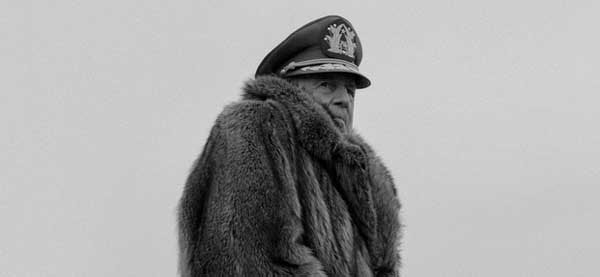
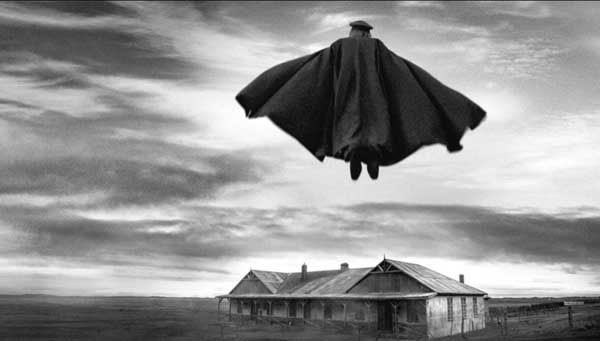
“El Conde” is one of the most beautiful films I’ve seen this year. It’s also one of the dopiest. The beauty comes from the stunning black and white photography of Ed Lachman (”Carol”, “Far From Heaven”). The dopey comes from just about everything else. Its premise, which is as slim and feathery as a layer of chiffon, is like something hatched up in an SNL writer’s room after a night of too many party drugs. What if Chilean dictator Augusto Pinochet wasn’t just a foul, murderous creep, but an actual vampire? Imagine the hijinks! As metaphors go, it’s about as subtle as a brick bat, but in the right hands, even the most obvious touch can achieve a kind of beguiling artfulness, like the image of death playing chess in Bergman’s “The Seventh Seal” And to be sure, when director Pablo Larraín (”Spencer”, “Jackie”) is hitting his sweet spot, “El Conde” is transcendentally gorgeous. Every time, for instance, one of the film’s vampires levitates off the ground and goes soaring into the clouds, “El Conde” too, takes marvelous flight.
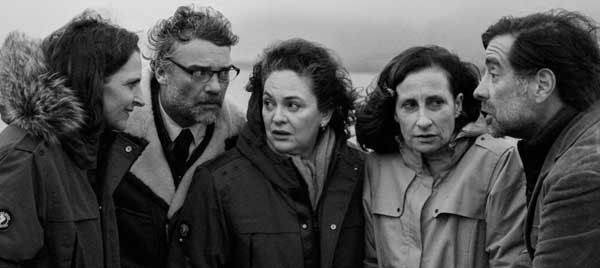
For most of the movie’s running time, however, everything is emphatically earthbound since Larraín and co-screenwriter Guillermo Calderón haven’t found a way to move past their mildly amusing, one-joke conceit, as if the idea of an undead tyrant literally feeding on the hearts of his hapless citizens was more than enough satire for one film. It’s not like despot comedy can’t work. Armando Iannucci’s 2017 film “The Death of Stalin” is a pitch black satire, about a worse dictator than Pinochet, that manages to be viciously funny and terrifying at the same time. But Iannucci started with a great script, then brought together a group of brilliant comic actors and, most importantly, established a definitive tone of intensely overwrought realism. Though the performances could get broad, sometimes to the point of lunacy, the complexly drawn characters, with their overriding fear of imminent death, managed to anchor the entire cast in a deeply rooted truth. Larraín, on the other hand, has assembled a solid, though unexceptional, company of actors for his story. Their faces may be interesting in repose but once they start emoting, the overall tone gets mired in the blasé camp of a telenovela. Only Gloria Münchmeyer as Pinochet’s wife Lucia manages to make an impression. Her marvelous close-up near the end of the film, as she stares out a window at the swirling mayhem around her, is an absolute stunner. The plot of “El Conde” is less than ideal too, with its pointlessly busy and repetitive scenes involving the dull machinations of the Pinochet children bickering shrilly over who’s going to get daddy’s millions.
And a storyline involving an exorcist nun masquerading as an accountant (Paula Luchsinger, shamelessly mugging) manages to be both confusing and over explained. Plot threads are emphasized then dropped inexplicably. Rules are made, then broken. (At one point we’re told that a vampire can’t kill the vampire who made them. The next moment we see it happen). And character motivations change repeatedly and seemingly without cause. (Near the end of the film a female vampire flees her attacker by flying into the air, but later lets herself be marched to the guillotine without a struggle. Why? I have no idea). Making matters worse is an incongruous voiceover that never seems to shut up, telling us again and again things we already know or are just about to learn. Spoken in the wry, upper-class tones of a female British snob, this exhausting narration removes whatever mystery there is to the plot. Yet, despite all these problems it’s still one of the most exquisite films you are likely to see all year. The flying scenes, especially a three minute sequence of a new vampire testing out her powers, are rapturously thrilling. And a tracking shot of a speedboat full of nuns racing downriver, their wimples fluttering in the wind like a flock of egrets is so giddily delightful I nearly forgave Larraín all his bad decisions.
Ultimately, though, the question remains: Why rebrand Pinochet in the first place? Why take this all-too-human “monster” who oversaw the arrest, torture and murder of thousands of people during his seventeen-year reign of terror, and attempt to comically transmute him into a creature of myth? By making him a facile walking metaphor for evil, there’s no real need to try and understand him: Of course he’s bad, he’s a vampire. And this tidy explanation makes us safe. Because when evil is relegated to the world of fantasy, there’s no need to look in the mirror and see the potential monster in us. STREAMING ON NETFLIX |

|
An LA-based playwright, JUSTIN TANNER has more than twenty produced plays to his credit, including Voice Lessons, Day Drinkers, Space Therapy, Wife Swappers, and Coyote Woman. His Pot Mom received the PEN-West Award for Best Play. He has written for the TV shows Gilmore Girls, My So-Called Life and the short-lived Love Monkey. He wrote, directed and edited 88 episodes of the web series Ave 43, available on YouTube. Tanner is the current Playwright in Residence for the Rogue Machine Theatre in Hollywood, where his most recent play Little Theatre, of December of 2022, was met with rave reviews. Charles McNulty of the LA Times writes, "Engrossing... a comedy à clef... “Little Theatre” is invaluable.'"
|


To receive a free subscription to our Sunday Lounge! newsletter, Click Here
Have a suggestion? Send an email to the Editor, Click Here